
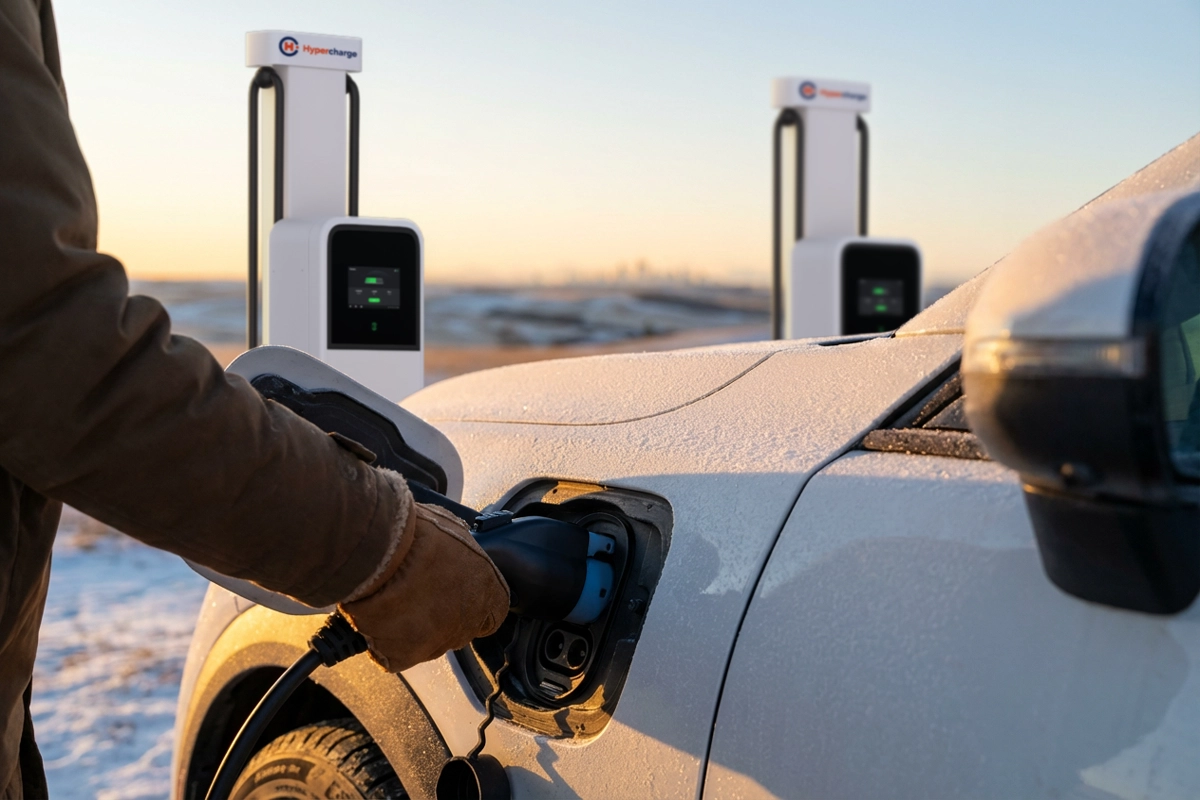
With the shift to more electric vehicles in Alberta building momentum, municipalities have become key players in creating essential public charging infrastructure. Investing in EV charging not only prepares communities for the wide-scale EV adoption ahead, it makes them cleaner, more prosperous, and more liveable today.
Here we take a look at the current landscape of EV charging in Alberta and the huge potential for its future.
Alberta Public EV Charging by the Numbers
81%
of Alberta EV owners who participated in a 2024 CAA survey said they are highly likely to buy another EV.
44%
of respondents to the same CAA survey were not at all satisfied with the availability of public charging.
89%
of EV drivers who don’t have access to charging at home rely on public charging for more than 75% of their charging needs, according to a 2024 Pollution Probe survey.
170
EV charging stations are being installed with financial support from the Alberta Municipalities’ Electric Vehicle Charging Program (EVCP), which is still accepting expressions of interest to its waitlist.
Think Provincial, Act Local
There are fewer than 2,000 public chargers for light-duty vehicles currently available in Alberta according to Transport Canada, well behind Ontario and Quebec, which have more than 11,000 each.
But the numbers for electric transport fleets tell a different story. Second only to Ontario in its total stock of medium- and heavy-duty vehicles (MHDVs), Alberta has the most public charging sites for these heftier EVs by a wide margin and boasts more rural public charging locations for MHDVs than the rest of Canada combined.
From Medicine Hat to Kapawe’no First Nation, local governments have been taking the lead on EV charging, working with Hypercharge to bring its many benefits to the province and their communities. Investing in public charging removes barriers to EV ownership, especially for drivers who lack reliable access to charging at home or at work.
Public chargers also support local businesses by drawing in customers, clients, and tourists who value sustainability and the convenience of a charge on the go.
By seizing opportunities and incentives to expand the public charging network for a range of vehicles, Alberta can strengthen connections between communities, boost local businesses, and promote tourism across Wild Rose Country, ensuring the province stays competitive as the transition to electrified transportation accelerates.
Best EV Chargers for Public Charging in Alberta
Hypercharge has two types of EV charging stations for public charging: Level 2 and DC Fast.
Choose a Level 2 charging station for longer parking sessions at hotels, restaurants, hospitals, shopping centres, community hubs, parks, and municipal offices. Just an hour of charging, for example, can add up to 50 kilometres in driving range, depending on the vehicle’s maximum charging rate, the charger model, and the available power.
A DC Fast charger gets vehicles back on the road at lightning speed, even during those blustery Alberta winters, when charging speeds can slow down. A CAA study found the average EV can add 100 kilometers in just fifteen minutes of fast charging in cold weather—perfect for quick road stops, rideshare vehicles, and transport fleets.
Hypercharge Pro Tip: Arenas, band halls, and other community gathering spots are prime locations for Level 2 chargers, with dwell times that are right-sized for charging up.
Alberta Public Charging Case Study: Level 2 vs DC Fast
To compare typical charging sessions from Level 2 and DC fast chargers, we collected data from charging sites in a Central Alberta municipality. T
he town has fewer than 18,000 residents but is located just 25 kilometers from the nearest city in a highly scenic area that attracts nearly 1 million visitors per year.
In 2022, its town council leveraged the Municipal Climate Change Action Centre’s (MCCAC) Electric Vehicle Charging Program to subsidize the cost of installing eleven public charging stations near key gathering spaces, including a park and a busy community centre.
With the powerful capabilities of Quantev™ Operations Suite, our cloud-based site control and analytics platform, we calculated the following averages for our sample municipality’s public charging sessions.
Level 2 Charging – Charging Fee: $2 per hour
Average Duration:
Average Range Added*:
kilometres (km)
Average Charging Speed:
kilowatts (kW)
Average Energy Delivered:
kilowatt-hours (kWh)
*Estimate based on 4 kms per kW for Tesla Model 3.
DC Fast Charging – Charging Fee: $0.35 per minute
Average Duration:
Average Range Added*:
kilometres (km)
Average Charging Speed:
kilowatts (kW)
Average Energy Delivered:
kilowatt-hours (kWh)
*Estimate based on 4 kms per kW for Tesla Model 3.
Together, these two profiles show how Level 2 and DC Fast charging play distinct but complementary roles in a public network.
Level 2 sessions in this Central Alberta town provide affordable, steady charging that fits naturally into daily routines and community activities, while still delivering meaningful range and predictable fee revenue.
DC fast sessions deliver significantly more energy and driving range per visit in a shorter time, which is better suited to highway traffic, visitors, and fleet operators who prioritize quick turnarounds.
Talk to Hypercharge
Hypercharge partners with municipalities, businesses, and community leaders across Alberta to design public EV charging networks that work in real life. We help you choose the right mix of Level 2 and DC fast chargers, pinpoint the best locations, set pricing, and use real session data to keep stations reliable in every season.
Schedule a free EV charging consultation with one of our experts today to explore options for your community or organization, from early site planning and funding applications through to installation, launch, and ongoing performance monitoring.