
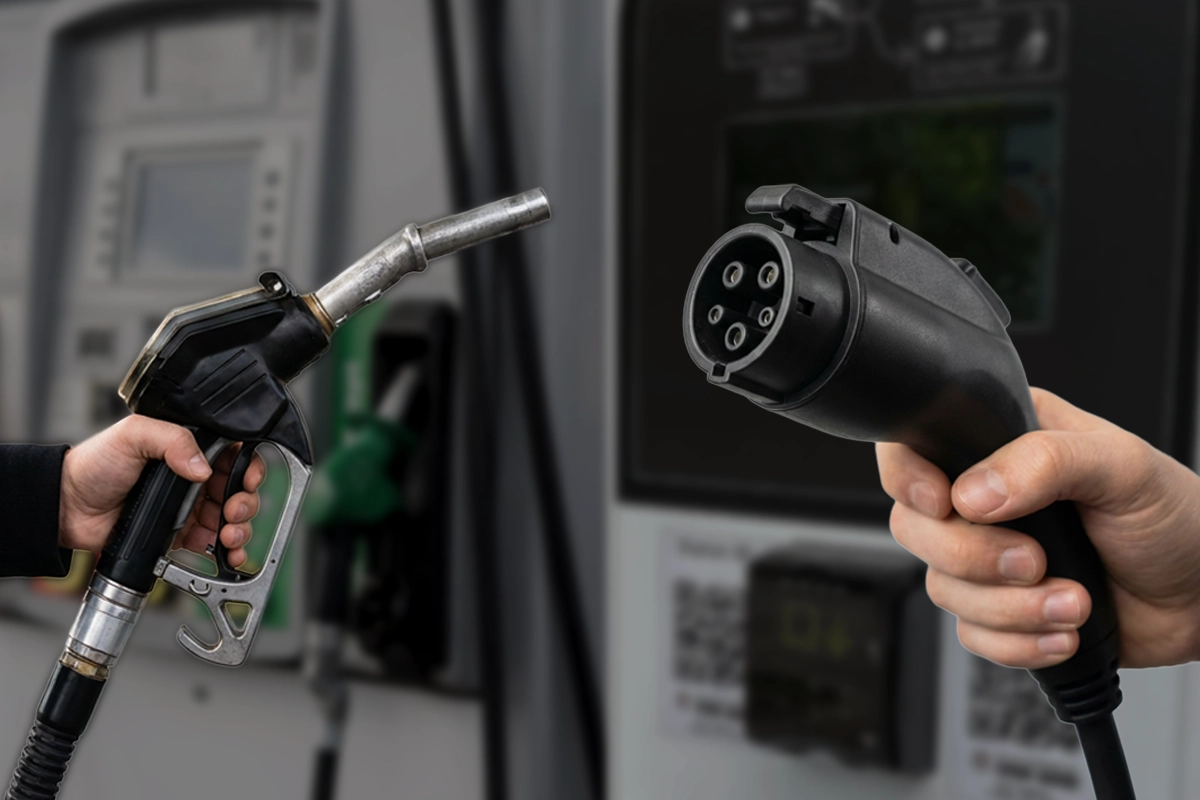
In a previous post, we looked at the significantly more affordable maintenance costs for electric vehicles, which are about 40% lower compared to gas or diesel models. But the savings don’t stop there. Switching to an EV can also cut your fuel costs dramatically.
Statistics Canada reports that the average household spends about $2,600 annually on gasoline and other fuels, while the Canadian Automobile Association (CAA) estimates that EV drivers spend only a few hundred dollars per year charging up.
We dug into recent studies and ran the numbers to show just how much you could save each year by going electric.
The Cost of Charging at Home
Electricity rates vary widely across provinces, states, and territories, which makes where you live one of the biggest factors affecting charging costs.
Clean Energy Canada calculated the cost of charging a Chevrolet Bolt to its full 416-kilometre driving range at home, using residential electricity prices from all ten Canadian provinces: Quebec’s relatively inexpensive hydroelectric rates came out on top, delivering a full charge for just $5.46. Prince Edward Island was the most expensive at $12.61.
The federal government’s most recent vehicle survey shows that Canadian households drive an average of 16,000 kilometres (9,940 miles) per year.
To estimate the charging costs for that much mileage, we’ll use rates from a province that falls in the middle of the pack for electricity costs: Ontario. Its current off-peak rate is 9.8¢ per kilowatt-hour.
Our sample vehicle is a 2025 Nissan Leaf SV, a popular and affordable EV option with a driving range of 240 kilometers and a combined fuel rating of 18.9 kilowatt-hours consumed per 100 kilometers driven, or 0.189 kilowatt-hours per kilometer.
Taking advantage of Ontario’s off-peak rates, a Leaf’s charging costs would be just $296 per year.
Hypercharge Pro Tip: Level 2 charging stations are ideal for apartments, condos, and workplaces. Sleek and modern, the Hypercharge Halo offers up to 11.5kW output and 50 km of range per hour for convenient charging at home and on the job.
Public Level 2 EV Charging Rates
The best place to charge is wherever you are – at home, at work, or on the go – but for many residents of multi-unit residential buildings, public charging plays an especially important role.
A Pollution Probe survey found that 42% of Canadian EV owners living in apartments and condos rely on public charging for more than half their charging.
What impact does this have on annual charging costs?
To find the answer, we first need to choose a pricing model for public EV charging fees. The most common models are:
- Energy consumed: Per kilowatt-hour (kWh)
- Time: Per minute or per hour
- Flat fee: Per charging session
- Subscription: Recurring fee for unlimited charging
For an apples-to-apples comparison, we’ll stick with the per-kWh approach that we used in our home charging example.
Next, we’ll turn to Quantev™ Operations Suite, Hypercharge’s cloud-based site control and analytics platform, to examine public rates across a variety of charging sites. Quantev™ reports that Level 2 public charging typically ranges from about $0.20 to $0.25 per kWh, though it can reach $0.30 or more.
If a 2025 Nissan Leaf SV driver did half of their charging at the high end of $0.30 per kwh, or more than triple Ontario’s off-peak residential rate, the annual charging cost would rise from $296 to about $612 – still only a fraction of the national average gasoline spend of $2,600.
Hypercharge Pro Tip: Using Quantev™ Operations Suite, charging station managers can set up dynamic charging rates that automatically adjust fees according to time-of-day utility rates and encourage off-peak charging.
Public DC Fast Charging Rates
An hour of Level 2 charging while you run errands or grab a bit to eat can add up to 50 kilometres in driving range, depending on the vehicle’s charging rate, the available power, and the charger model.
By comparison, DC fast charging can fully charge an EV battery in less than half an hour; however, the cost of charging can be considerably higher.
In Alberta, for example, the Alberta Motor Association (AMA) reports that Level 2 public charging fees range from $1-2.50 per hour, compared to $15 per hour for DC fast charging.
Of course, you may not need a full hour of fast charging, but per-kilowatt-hour rates also tend to be higher, with ranges of $0.30 to $0.70 per kilowatt-hour as set by private station owners on the Hypercharge network.
Due to the higher cost of DC fast charging, and the slight strain it can put on an EV battery, most EV experts recommend budgeting for only occasional use of fast charging for quick top-ups on the go or road trips.
Hypercharge Pro Tip: Most EVs have regenerative braking systems that capture kinetic energy when a vehicle slows down, converting it into energy that’s stored in the battery. This can recover as much as 30% of the stored energy, extending the battery’s driving range.
Talk to Hypercharge
Hypercharge helps properties and businesses bring EV charging to life with solutions designed around real-world needs and long-term reliability.
Schedule a free EV charging consultation with one of our experts today to see what a rollout could look like for your apartment or condo building, workplace, or commercial site, and support more drivers making the switch to electric.