
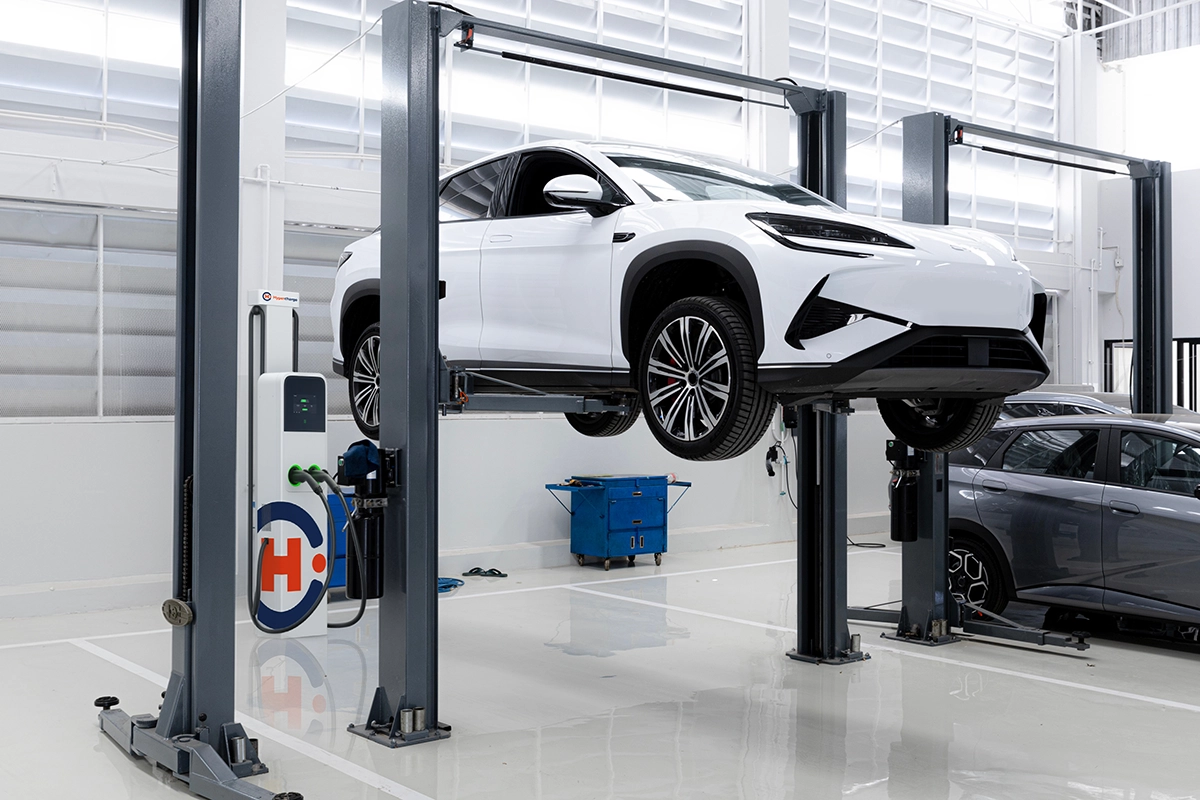
Electric vehicles require far less maintenance than gas‑ or diesel‑powered cars that emit climate-warming greenhouse gasses.
That means you can enjoy significant savings per kilometre, per year, and across the lifetime of your vehicle.
In this post, we show why going green is not only better for the planet but can make a real difference to your wallet.
Why Are EVs Less Expensive to Maintain?
Inside a internal combustion engine (ICE) is a confined chamber where fuel ignites and combusts, creating energy from the expanding gas that the engine converts into mechanical power.
This process requires a complex machine made up of many moving parts—up to 2000 of them—that have the potential to malfunction or break, leading to repairs and replacements.
In contrast, EV have a batter-powered electric motor with approximately 20 moving parts and can be serviced much less frequently.
What You Can Skip: Engine Upkeep
When you make the switch to an EV, you’ll say goodbye to engine-related maintenance, including:
- Oil changes
- Filter changes
- Spark plug replacement
- Timing belt replacement
- Emission system repairs
Where You’ll Spend Less: Brakes
All EVs have traditional hydraulic brakes and many also have regenerative braking systems that capture kinetic energy and convert it into energy that’s stored in the battery. Relying less on traditional brakes extends the life of brake pads and rotors, or discs, and braking fluid can be replaced less often.
Hypercharge Pro Tip: Though EVs tend to have a higher sticker price than their ICE equivalents, prices are starting to tick downwards and the lower cost of maintenance and fuel can erase that difference in less than five years.
What Servicing Does an EV Need?
Though EVs may go easier on brakes, they’ll still need TLC for the other parts they have in common with ICE vehicles, like tires and windshield wipers.
As well, occasional battery health checks will confirm that performance is degrading at the anticipated small rate (about 2% per year), and it’s also prudent to ensure the coolant that keeps the battery system from overheating is maintained at an adequate level and quality.
While some manufacturers’ guidelines suggest coolant can last for long intervals or even the vehicle’s lifetime, issues like damaged hoses can lead to leaks and contamination.
Where You May Spend More: Tires
EVs need special tires that can handle the extra weight from the vehicle’s battery, the demands of regenerative braking, and the instant toque that allows EVs to achieve maximum acceleration from a standstill.
Depending on the vehicle model, tire model, and the particular demands made on them, EV tires may need more frequent rotations and could wear out up to 20% faster than conventional ICE tires.
Hypercharge Pro Tip: Most EV battery warranties cover at least eight years or 160,000 kilometres (100,000 miles), though batteries may last up to 20 years. Its lifespan can be lengthened by taking simple steps, such as maintaining a charge level between 30–80%, preconditioning the battery before charging, and limiting DC fast charging to moderate use.
EV Maintenance Costs
A number of factors influence the cost of maintaining an EV, including the vehicle’s model and age, the availability of parts, and driving habits that can put extra wear and tear on the vehicle. On average, however, the maintenance cost per kilometre or mile for a light-duty battery-electric vehicle (BEV) is 40% lower than for an equivalent ICE vehicle.
BEV per km/mile
5.2 cents CAD per km
6.1 cents USD per mile
ICE per km/mile
8.6 cents CAD per km
10.1 cents USD per mile
Source: U.S. Department of Energy
That adds up when you consider how much mileage North Americans rack up each year. The U.S. Department of Transportation reports that Americans drive an average of 21,700 kilometres (13,500 miles) annually, and respondents to the Canadian government’s most recent vehicle survey drove an average of just over 16,000 kilometres (9940 miles) per year.
BEV Yearly Costs
16,000 km per year
$832 CAD one year
$4,160 CAD five years
13,500 miles per year
$823.50 USD one year
$4,117.50 USD five years
ICE Yearly Costs
16,000 km per year
$1,376 CAD one year
$6,880 CAD five years
13,500 miles per year
$1,363.50 USD one year
$6,817.5 USD five years
Source: U.S. Department of Energy
Making The Leap
Successful EV ownership starts with convenient access to dependable EV charging—and that includes drivers who don’t live at ground level. If you’re ready to make the switch, check out our essential guides to frictionless EV charging installations for apartments, condos, and workplaces:
Talk to Hypercharge
Hypercharge offers tailored charging solutions that empower drivers and communities across the continent to go electric.
Schedule a free EV charging consultation with one of our experts today to discover how your apartment/condo building, workplace, or business can help accelerate EV adoption and play meaningful role in a cleaner, more sustainable future.