
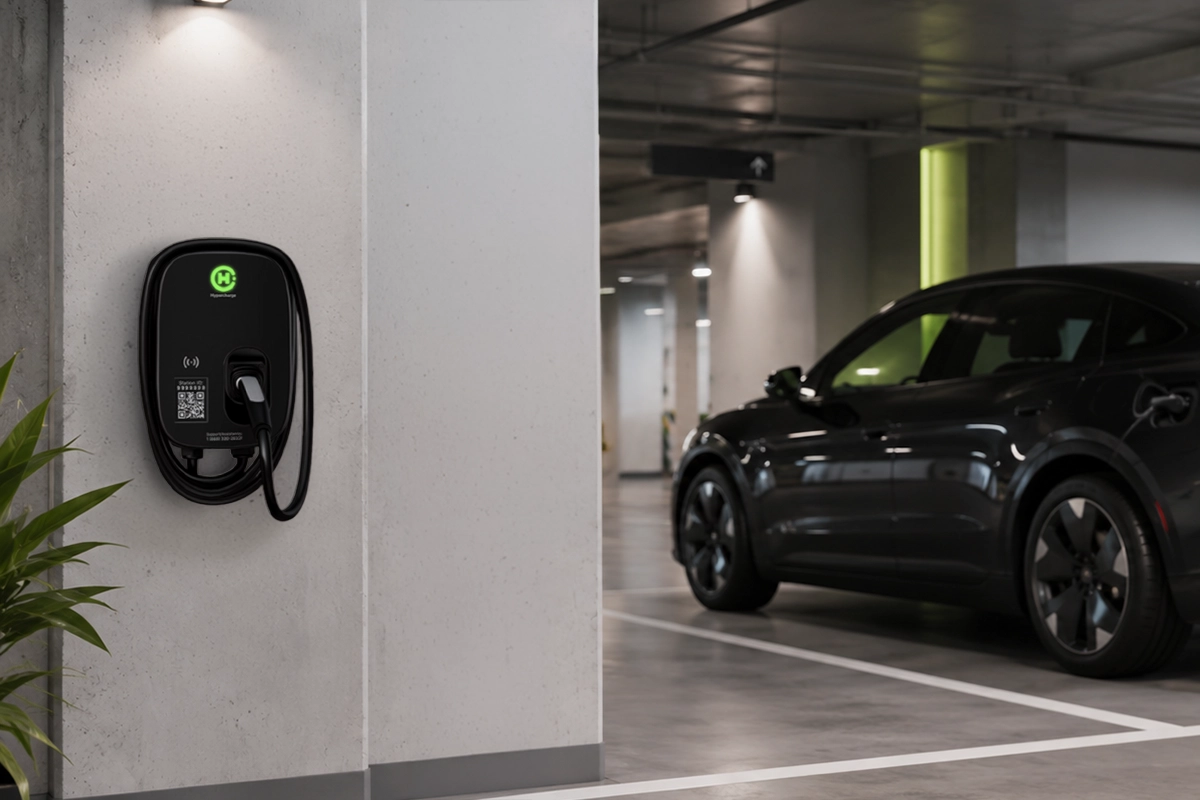
Charging an electric vehicle at home may be the most convenient option for many EV drivers, but not every home is equipped for it yet. For drivers in apartments or condos, access to charging at home or in their building should be part of the buying plan from the start.
According to Natural Resources Canada and EV advocates, people living in multi-unit residential buildings (MURBs), such as apartments and condos, face higher barriers to installing EV chargers compared to single-family homes. Until a building charging project is in place, they may be more likely to rely on public chargers for day-to-day driving.
Should you purchase an EV if you can’t charge at home yet? It can still make sense, but the best experience usually comes from having reliable charging at home, at work, or at place you frequently visit. Public charging can fill gaps, especially while your building is evaluating shared or assigned-stall charging.
Where Will You Charge?
Workplaces are the second-most common charging locations after charging from home. A Level 2 charger can replenish most EV batteries during a typical eight-hour workday, and many employers now offer free or low-cost charging as a valuable employee perk. If your workplace offers EV charging, be sure to confirm any charging fees and how often chargers are available.
If charging at work isn’t an option, you’ll need to line up public charging options and understand how they fit into your routine. Fortunately, public charging had expanded rapidly across North America in recent years, with new options emerging in every type of community space.
- Retailers and other businesses—including shopping centres, auto dealerships, private offices, and even gas stations—offer EV charging to attract customers and clients and establish new revenue streams.
- Parking lot operators, such as Precise ParkLink, have significantly ramped up their charging infrastructure, allowing EV drivers to make the most of their parking time.
- Municipal charging has also grown significantly in many regions, with more on-street charging and charging stations at community hubs, such as halls, libraries, pools, and arenas, though availability can vary widely across provinces and states.
Hypercharge Pro Tip:
How much could you save by going electric? We’ve crunched the numbers:
How Much Does it Cost to Charge an Electric Vehicle?
How Fuel Efficient are EVs: Cost per Distance to Drive Electric
Assessing Your Charging Needs
An EV’s driving range is the distance it can travel on a full charge. To estimate how often you may need to charge, compare a vehicle’s range to the average number of kilometres or miles you drive per week.
Consider, too, your typical driving patterns and how often you break with routine. If most of your trips are short, you may be able to rely on a weekly top-up, but you’ll still want a dependable plan for where that charge will happen.
If you’re a weekend warrior taking longer trips, you’ll want to hit the road with a fully charged battery and may need to rely on DC fast charging options along your route.
Hypercharge Pro Tip: The best charging option is the one you can count on most often. For many drivers, that means charging at home or in their building, with public top-ups supporting the rest of the routine.
The Hypercharge Driver Mobile App is a user-friendly way to find chargers on the Hypercharge network, and to initiate, monitor, and pay for charging sessions.
While working toward charging at your building, extend your search using a public charging community app, such as ChargeHub. These tools can provide not only charger locations, but their availability, charging speed, even user reviews.
As you map your charging options, take note of charging speeds. A Level 2 charging station can add up to 50 kilometres in driving range with an hour of charging but will need several hours to fully replenish a battery.
A DC fast charger can recharge a battery in less than 30 minutes—a terrific option for charging on the go—but charging fees may be higher and the powerful current can impact long-battery health if used too frequently.
Hypercharge Pro Tip: Every EV has a maximum “charging capacity” or “power acceptance rate” that indicate how fast the onboard charger can take in energy, no matter how fast the charging station can deliver it.
Get EV Charging in Your Building
Convincing your condo board, landlord, or homeowners’ association to install EV charging may be easier than you think.
Our guide covers where to begin, how Hypercharge can support your project, and the key components of a successful proposal.
Talk to Hypercharge
Hypercharge equips apartments, condos, communities, workplaces, and businesses with customized EV charging solutions.
To bring charging to your building, ask your strata council, condo board, HOA, or property manager to schedule a free EV charging consultation today to explore tailored options that enhance convenience, generate revenue, and boost property value.