
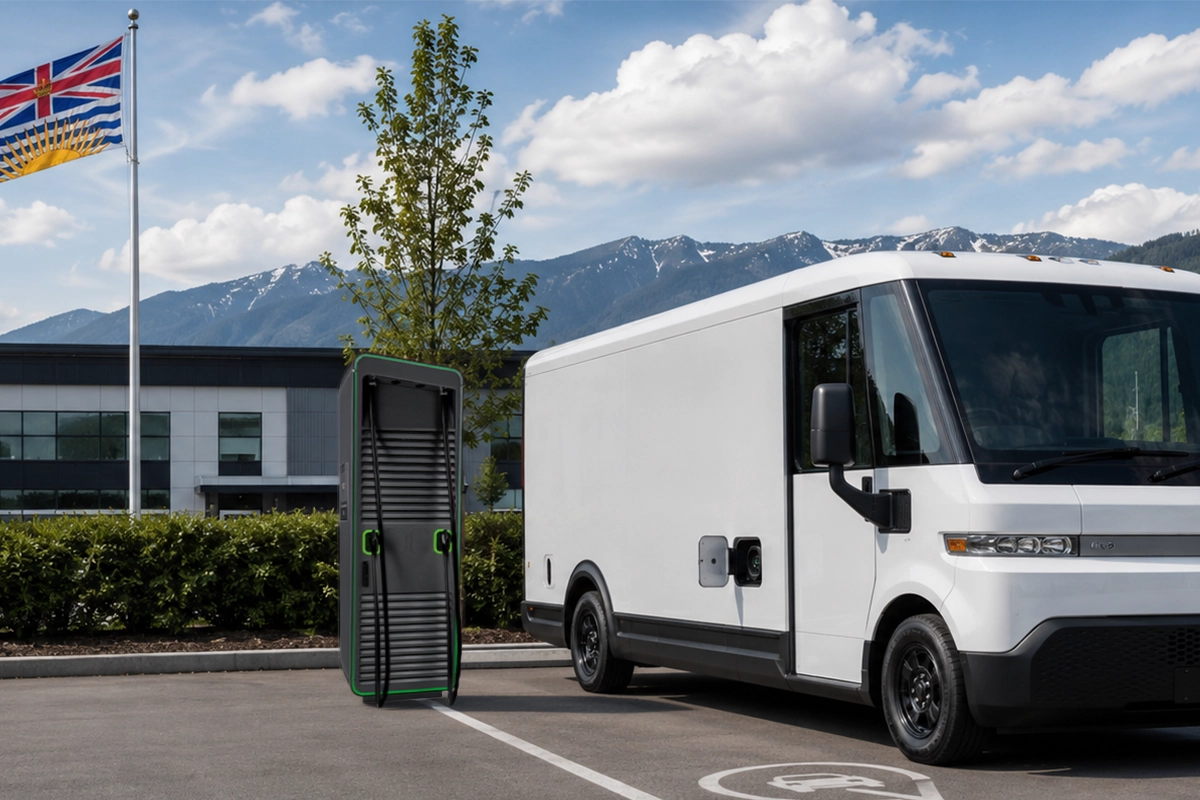
British Columbia businesses, Indigenous organizations, local governments, and non-profits will soon be able to access renewed funding through the CleanBC Go Electric Rebates program for medium- and heavy-duty zero-emission vehicles.
The refreshed program opens on August 10, 2026, providing point-of-sale rebates for eligible commercial zero-emission vehicles across vehicle classes 2b to 8. The program was paused in August 2025 after funding was depleted and has since been updated to better meet the needs of BC fleets, organizations, and industry.
With rebates now applied at the point of sale and a pre-approval process designed to reserve funding before purchase, the relaunched program gives fleet operators more certainty as they plan vehicle procurement, charging infrastructure, and long-term electrification strategies.
Funding Highlights
Eligible applicants can receive rebates based on vehicle class, with additional funding available for Indigenous organizations, local governments, and non-profits through a 20% rebate top-up.
Rebate amounts are based on vehicle class and may be subject to program funding, eligibility requirements, and other program criteria. Vehicles receiving rebates must operate in BC for at least 48 months. Leased vehicles with terms of 48 months or longer are eligible, while lease terms shorter than 48 months may receive a prorated rebate amount.
Funding Breakdown by Vehicle Class:
• Class 2b, excluding pickup trucks:
– $5,000 rebate | $6,000 with top-up
• Class 3, excluding pickup trucks:
– $30,000 rebate | $36,000 with top-up
• Class 4-5:
– $60,000 rebate | $72,000 with top-up
• Class 6-7:
– $90,000 rebate | $108,000 with top-up
• Class 8:
– $130,000 rebate | $156,000 with top-up
Who Can Apply?
The refreshed Go Electric Rebates program is open to BC-based organizations, including:
- Businesses
- Indigenous organizations
- Local governments
- Non-profits
Businesses can receive rebates for up to 5 vehicles per year. Indigenous organizations, local governments, and non-profits can receive rebates for up to 10 vehicles per year.
Applicants will need a Business BCeID to apply. Organizations that already have a Business BCeID can use their existing account, while those without one should begin the registration process before the program opens.
Eligible Vehicles
The program supports medium- and heavy-duty zero-emission vehicles used in commercial operations. A full list is available here.
Eligible vehicle types may include battery electric, hydrogen fuel cell, and plug-in hybrid vehicles across vehicle classes 2b to 8, provided they are approved through the program’s eligible vehicle list.
Pickup trucks are not eligible under the refreshed program.
How the Application Process Works
The updated process is designed to give applicants more confidence before committing to a vehicle purchase or lease.
The process is expected to follow these steps:
- Vehicle buyer applies online to reserve funds for the applicable vehicle class for up to 2 months.
- Vehicle buyer chooses an eligible zero-emission vehicle and orders through an approved seller.
- Approved seller applies online to reserve funds for up to 12 months.
- Vehicle buyer receives the rebate at the point of sale.
- Approved seller applies for reimbursement within 45 days of the sale.
This structure helps organizations reserve funding before finalizing procurement, which can be especially important for fleets working through internal approvals, tenders, or longer vehicle delivery timelines.
Important Funding Dates
Program intake is ongoing, but funding will be added in planned phases. If available funding is depleted before the next release date, intake may temporarily close until the next funding release.
Key Dates:
- August 10, 2026: Program opens
- December 10, 2026: Additional funds added and intake reopens, if closed
- April 12, 2027: Additional funds added and intake reopens, if closed
The Province may add more release dates if funding remains available.
Planning Your Fleet Charging Infrastructure
For organizations considering medium- and heavy-duty zero-emission vehicles, charging infrastructure should be part of the planning process from the beginning.
Vehicle rebates can help reduce upfront procurement costs, but successful fleet electrification also depends on reliable charging access, appropriate electrical capacity, site planning, load management, and ongoing monitoring.
Through the CleanBC Go Electric Fleet Charging Program, eligible organizations may also be able to access support for charging stations, fleet assessments, infrastructure assessments, and electrical infrastructure upgrades.
How Hypercharge Can Help
Hypercharge helps fleet operators, businesses, municipalities, and organizations prepare for EV fleet deployment with turnkey charging solutions that support operational needs today and future growth tomorrow.
Fleet Charging Consultation
Guidance on charging requirements, vehicle use patterns, site readiness, and infrastructure planning.
Turnkey Project Delivery
Support for charger selection, design, installation, commissioning, activation, and ongoing service.
Scalable Infrastructure
Charging systems designed to support phased fleet electrification as additional vehicles are added over time.
Talk to Hypercharge
With BC’s refreshed Go Electric Rebates program opening on August 10, 2026, now is the time for organizations to prepare.
Whether your organization is planning its first electric commercial vehicles or expanding an existing zero-emission fleet, Hypercharge can help you design, install, and manage the charging infrastructure needed to support reliable day-to-day operations.
Schedule a free EV charging consultation with one of our experts to learn how your organization can prepare for BC’s commercial zero-emission vehicle rebates and build a charging strategy that supports your fleet.