
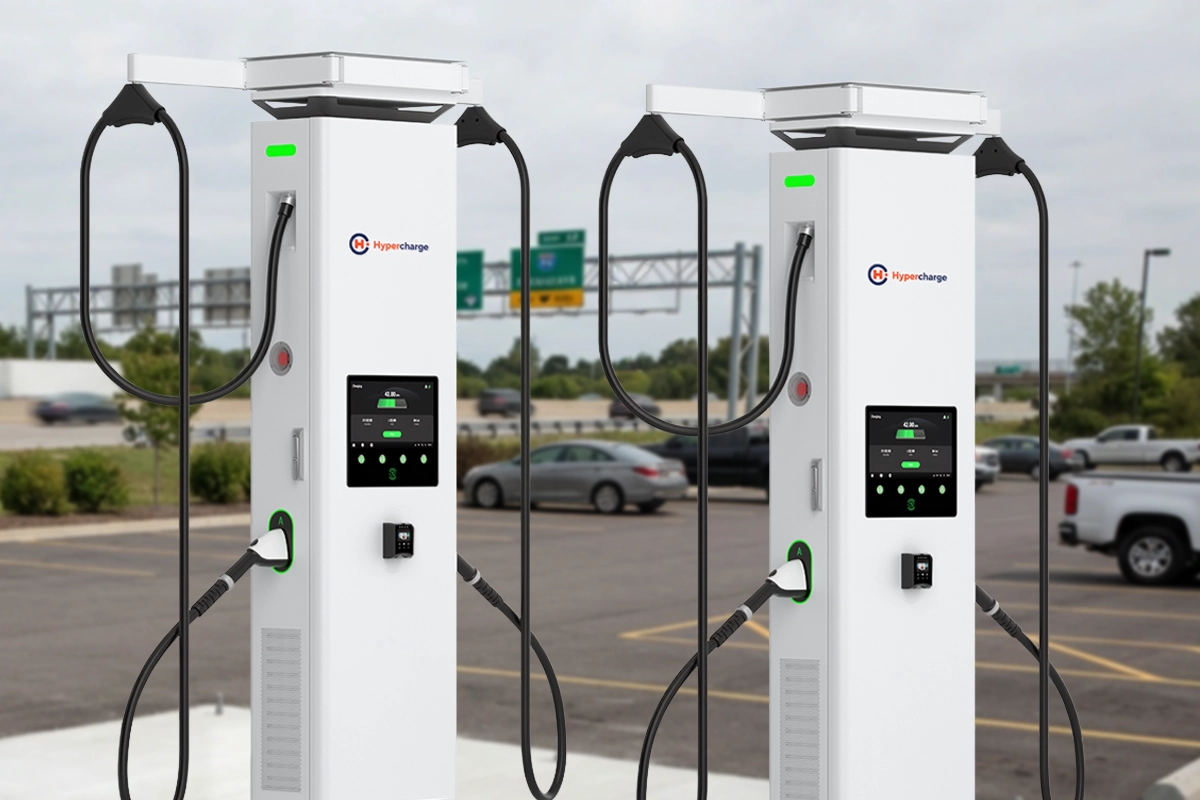
North America’s highways are lined with untapped opportunities for businesses and municipalities to create new revenue streams and support electric vehicle adoption through EV charging.
Canada’s National Highway System, for example, is a 38,000-kilometre network of lifelines for businesses, tourism, transport, and everyday connection.
Highway 401 holds the title as the busiest corridor and is one of the most travelled highways in the world. Running through Toronto en route to the Canada’s capital, the 401 ends at the Quebec border, just a short drive from Montreal, which boasts the highest EV adoption rate in the country.
Out west, the busiest corridor is the 300-km stretch of Alberta Highway 2 that joins Edmonton and Calgary, supporting a constant flow of travellers between the province’s two biggest cities.
Hundreds of thousands of vehicles travel these corridors daily, yet the availability of public charging is falling behind demand. A more robust public charging network is also essential for the critical arteries that connect communities and serve tourist destinations across North America’s vast landscapes.
This increasingly urgent need to expand public charging availability has prompted new government investment in EV charging infrastructure, with a strong emphasis on fast charging for major corridors.
But which charging solutions will best meet demand as businesses and municipalities for prepare for wide-spread EV adoption?
Hypercharge Pro Tip: In November 2025, the Zero Emission Vehicle Infrastructure Program (ZEIP) put out a call for proposals for public charging installation projects in high priority corridors, with $9 million in funding to be allocated on a first come, first served basis.
Fast Charging for Quick Pitstops
“Range anxiety” and concerns about lengthy charging times continue to deter some drivers from going electric or choosing an EV for longer trips, despite significant improvements to EV driving range.
With drastically shorter charging times compared to Level 1 and Level 2 charging stations, DC fast chargers are the key to range confidence and the future of highway travel.
Fast charging can replenish a battery in 30 minutes or less, making it ideal for highway rest stops; airports, transit stations, and other transport hubs; and any site with high demand from rideshare and fleet vehicles.
Take the Autel MaxiCharger DC series, a comprehensive lineup with power outputs ranging from 40kW to 640kW. Highly sophisticated yet user friendly, these durable fast chargers suit a variety of environments and stand up to the harshest weather conditions.

MaxiCharger DC
Compact

MaxiCharger DC
Fast

MaxiCharger DC
HiPower
Level 2 Charging for the Draw
When local municipalities in British Columbia’s Kootenay region joined forces to build the Accelerate Kootenays charging network, they strategically deployed fifteen fast chargers along its 1,870-kilometre route.
The rest of the network is populated by forty Level 2 charging stations chargers that draw visitors into communities. Adding approximately 50 kilometres in driving range per hour of charging, Level 2 chargers increase dwell time at retail locations, attract visitors to tourist destinations, and give restaurants, hotels, and parking lots an edge over the competition.
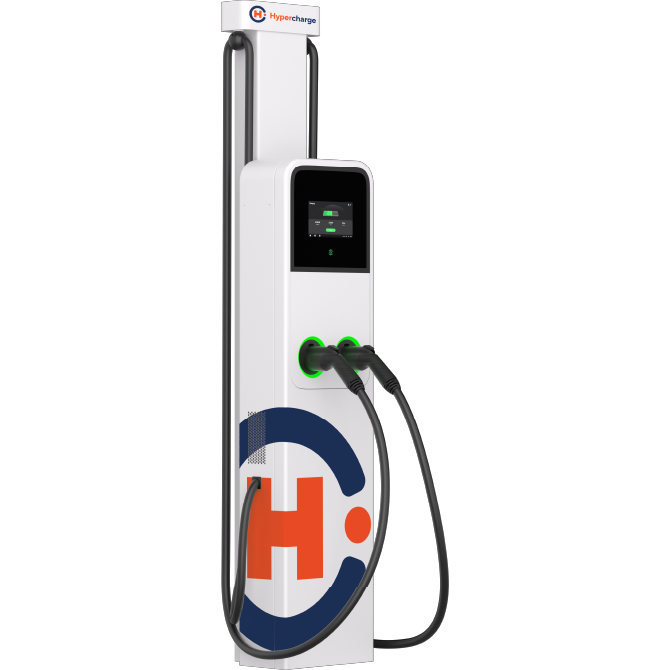
The low-profile Hypercharge Halo pairs a modern design with smart power technology and up to 11.5kW output for convenient charge-ups while users take in local sights. For an even swifter charge, the Autel MaxiCharger AC Pro and Autel MaxiCharger AC Ultra deliver a 19.2kW maximum output, as well as flexible and streamlined installation features.

Hypercharge
Halo

MaxiCharger AC
Pro
MaxiCharger AC
Ultra
Talk to Hypercharge
Hypercharge works with businesses, municipalities, and property owners across North America to plan and deploy EV charging for busy travel corridors that drivers can count on. Our team helps you evaluate the right mix of DC fast charging and Level 2, model utilization and peak demand, and plan site power and utility coordination.
Schedule a free EV charging consultation with one of our experts today to explore a corridor-ready plan for your site.