
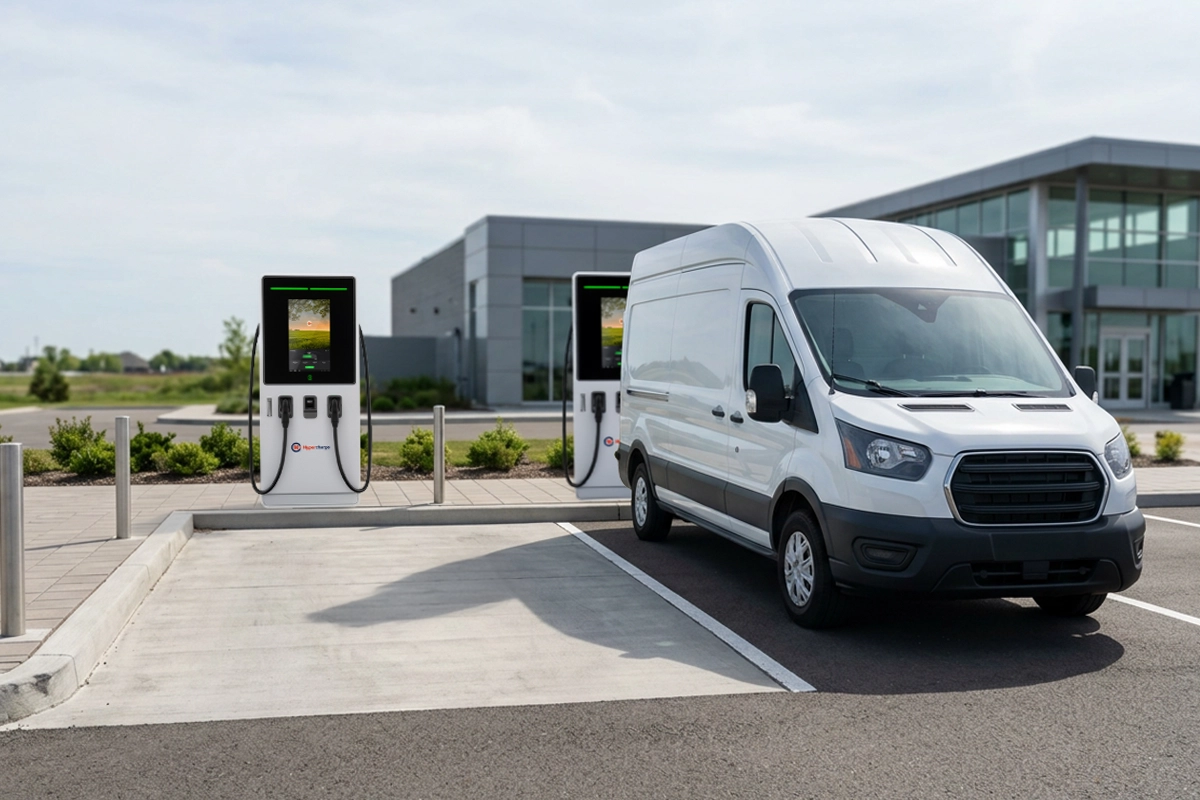
Across North America, fleet operators are embracing the many advantages of electric vehicles over internal combustion engine models, from lower fuel and maintenance costs to a smaller environmental footprint.
With more electrified fleets comes a greater need for convenient and dependable charging infrastructure. While many medium and heavy-duty vehicles (MHDVs) charge at fleet depots and some light-duty fleet vehicles are charged at employees’ homes, public charging plays a critical role in keeping fleets moving. Long-haul trucks, for example, may spend several days on the road before returning to their home base, making access to public EV charging essential. Carshare vehicles, rideshare drivers, delivery fleets, and shared commercial vehicles often need convenient charging throughout the day.
Transport Canada estimates the MHDV sector alone will require 275,000 public charging ports across the country, along with a combined total of 1.42 million public and private charging ports to meet future demand. Here, we take a look at where the best public EV charging opportunities await.
Hypercharge Pro Tip: Charging sites designed for medium and heavy-duty vehicles may include pull-through parking, longer charging cables, and larger turning areas to accommodate trucks and buses.
Highway Corridors
The highway corridors that connect urban centres and enable commercial transportation represent one of the biggest opportunities for public charging. Through charging fees, these heavily travelled roads can create reliable revenue streams for businesses and municipalities.
DC fast chargers are the key to trimming travel times, reducing drivers’ range anxiety on longer trips, and ensuring relatively quick turnover at charging stations. Many DC fast chargers can replenish a vehicle’s battery in 30 minutes or less, making them ideal for highway rest stops, travel centres, and service stations.
Rural Communities and Tourist Attractions
Robust public charging networks are just as important in rural communities, non-urban tourist destinations, and along the routes that connect them. Fast charging has an important role to play here, too, but Level 2 charging can be a solid option for hotels, restaurants, retailers, and municipal parking lots.
Level 2 chargers typically add about 50 kilometres in driving range per hour of charging and can fully replenish a battery overnight. They can draw fleet drivers into communities, encourage longer dwell times at retailers and other businesses, and promote local tourism.
Urban and Transport Hubs
For fleet drivers operating in busy urban environments, charging speed and convenience are always top of mind.
That’s because access to short charging sessions can have a direct impact on the bottom line for taxis, rideshares, delivery services, and other commercial fleets. These drivers gravitate towards DC fast chargers around hotspots like airports and train stations, as well as retail areas and entertainment districts.
Flexible payment options are just as important to drivers on the go. When we analyzed data from a popular rideshare charging site using Hypercharge’s cloud-based operating platform Quantev™ Operations Suite, we found that about 40% of the sessions were paid directly at the charger using a credit card. At the same site, more than half of drivers activated and paid for charging through the Hypercharge Driver Mobile App.
Hypercharge Pro Tip: With Quantev™ Operations Suite, charging station managers can assign each driver or driver group custom, dynamic charging fees that may be adjusted according to demand and local electricity rates.
Destination Locations
Reaching a destination offers another opportunity to get charged up. DC fast charging can ensure speedy turnarounds at retailers, warehouses, ports, and logistics facilities, while Level 2 chargers can fill pauses between drop-offs and pickups.
Planning Your Public Charging Project
Hypercharge’s public charging and fleet specialists offer expert guidance on charging strategies, equipment, and scalable electrical infrastructure. For comprehensive, end-to-end support, choose our Project Design & Installation service, which includes site planning, equipment selection, installation, commissioning, and ongoing management.
Once charging stations are up and running, Quantev™ Operations Suite provides valuable insights into charging frequency, session duration, and time of use that can help manage electricity costs, establish charging policies, and make informed decisions about future expansion.
Talk to Hypercharge
Whether you are planning charging for a highway corridor, urban hub, commercial destination, or rural community, Hypercharge can help you design a site that meets the needs of fleet drivers and generates long-term value.
Schedule a free EV charging consultation with a Hypercharge expert to explore the right charging strategy for your location.